Bengaluru · India · Global

I build the systems behind fast, reliable, cost-aware engineering.

I’m Rafique. I work across platform engineering, cloud reliability, DevOps, FinOps, and AIOps. I see them as connected parts of the same engineering problem.

PLATFORM ENGINEERING✦SRE✦DEVOPS✦FINOPS✦AIOPS

THE CALM SYSTEMS FIELD GUIDE

Seven ideas.
One operating discipline.

AI changes the speed of engineering. It does not remove the need for sound engineering judgement. Here is how I connect the practices that help teams move fast without creating unnecessary surprises.

01

Reliability

Move quickly, but never let velocity replace verification.

Reliability is not about writing perfect code. It is about finding problems before customers experience them and limiting the impact when something goes wrong. AI-generated changes should clear the same review, test, and SLO bar as human work.

TRY THISStart by defining what reliable means for the customer, then let those signals influence release decisions.
02

Availability

A service is available only when the customer can complete the task.

An external model in a critical journey brings its latency, limits, and outages with it. Plan for timeouts, controlled retries, and a simpler fallback that keeps the customer moving. Most importantly, practise recovery rather than only documenting it.

TRY THISList the dependencies in one critical journey and decide what should happen when each becomes slow or unavailable.

03

Security

Trust should be earned through evidence, not assumed from a clean-looking answer.

AI-generated code can look convincing while carrying unsafe assumptions or excessive permissions. Give agents only the access needed for the task, keep that access easy to revoke, and require clear human approval for security-sensitive changes.

TRY THISReview what every agent can read, change, and execute. Remove anything it does not genuinely need.

04

Scalability

An elegant demo is a starting point, not proof that the design will scale.

AI workloads can be bursty, and one feature may multiply model calls, searches, database requests, and background jobs. Test the whole customer journey under sudden demand and keep a human in the important architectural trade-offs.

TRY THISTest for spikes and dependency limits, not only comfortable averages.

05

Sustainability

A system should remain understandable and operable long after launch day.

AI can multiply weak engineering habits very quickly. Every new capability also creates ownership, maintenance, cost, and on-call responsibilities. If the team cannot explain who will operate and eventually retire it, the design is not complete.

TRY THISName the owner, operating model, and retirement path before adding another service.

06

FinOps

Cost is an engineering signal, not an invoice to inspect later.

Tokens, model calls, and agent actions can create unfamiliar cost patterns. Engineers should understand the cost of a useful customer outcome while they can still improve the design. Cost belongs beside reliability, latency, security, and scale.

TRY THISMeasure cost per successful outcome, then make that information visible to the team building the feature.

07

AIOps

Let AI reduce the noise before asking it to take control.

AI is valuable when it groups alerts, explains an incident, spots unusual behaviour, or recommends the next step. For destructive or difficult-to-reverse actions, AI should propose and a person should approve until the system has earned greater trust.

TRY THISBegin with AI as an observer and adviser. Expand its authority only when actions are bounded, visible, and reversible.

ABOUT

The titles changed.
I stayed close to the problems.

I’ve spent more than two decades working in technology. I started by building and running continuous integration and continuous deployment systems inside regulated banks. Today, I lead platform engineering and cloud reliability for a large enterprise technology organization.

I have led large engineering teams working across multi-cloud platforms, DevOps, SRE, FinOps, and operations. The scope has changed over time, but the work has consistently been about helping people and systems operate well together.

I still enjoy getting close to the actual problem. That might be an availability issue, an unexpected cloud bill, a slow delivery process, or an operational task that takes too much of an engineer’s time.

WHAT I AM WORKING ON NOWComposite SLO and SLI models · Availability at scale · Useful AI agents for engineering operations
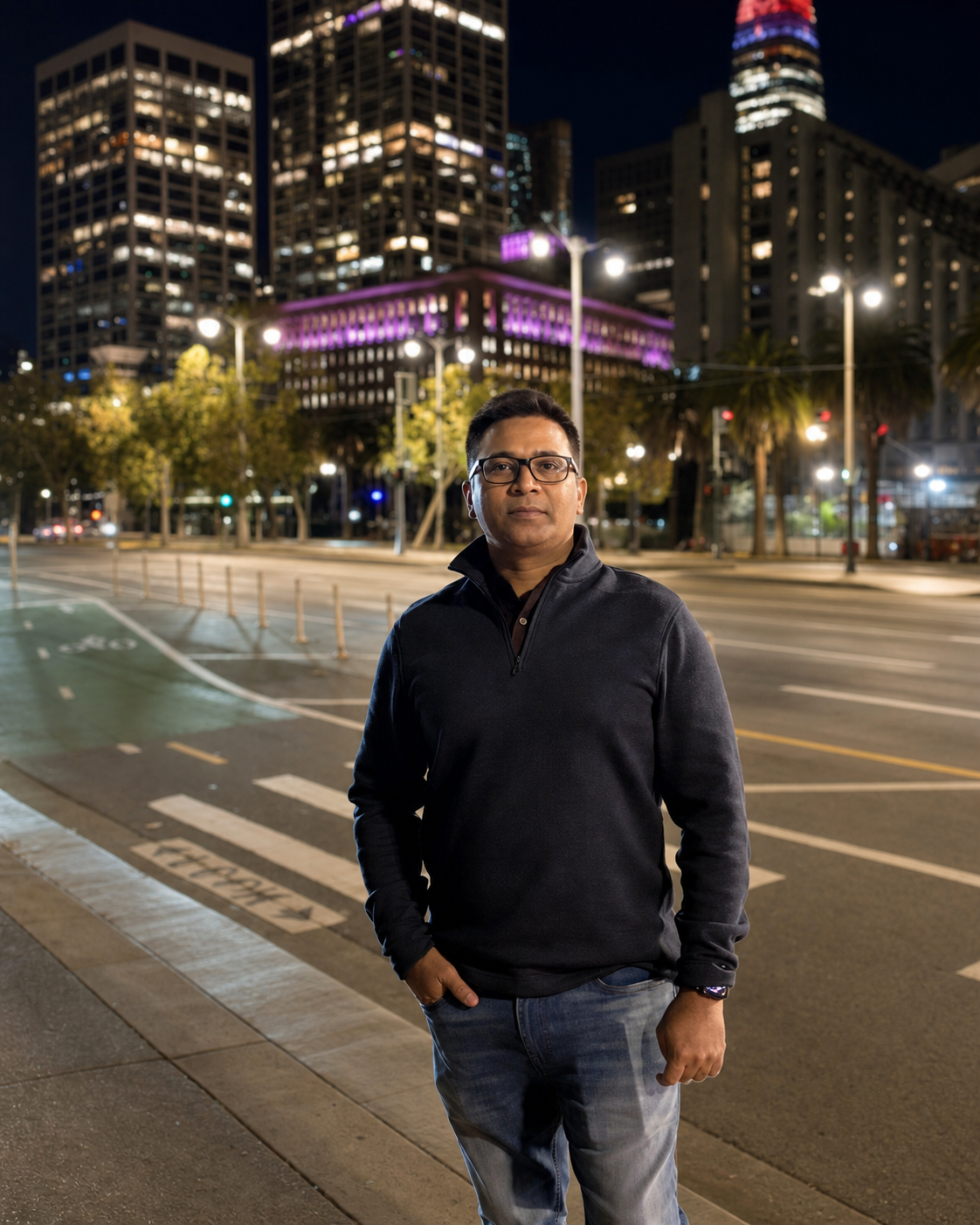
Rafique Syed in a city setting at night
Technology is global. Good engineering stays grounded in context.

WHAT SHAPED HOW I LEAD

The technical work matters.
So does the context.

01

Discipline from banking

My early years at Deutsche Bank Asia Pacific and Credit Suisse First Boston taught me to respect controls, traceability, and the operational details behind every release.

02

A global point of view

I have worked with teams and stakeholders across India, Singapore, Japan, Finland, and the United States. It taught me to listen for context before offering a solution.

03

Change happens through people

Tools are only part of a transformation. Training, mentoring, clear ownership, and helping teams understand why a change matters have been part of my work from SCM to platform engineering.

LEADERSHIP PHILOSOPHY

Build clarity.
Create ownership.
Stay close enough to help.

I believe good leadership makes complex work feel more manageable. My role is to give teams a clear direction, create the conditions for people to take ownership, and remove the obstacles that slow them down.

I stay close enough to understand the real problems, without becoming the person who must solve everything. I encourage engineers to question assumptions, learn from failures, and make decisions with reliability, security, cost, and the customer in mind.

The goal is not to build teams that depend on a leader. It is to build teams that grow stronger, more confident, and more capable over time.

CLARITY✦OWNERSHIP✦GROWTH

MY JOURNEY

I’ve seen software delivery change from the inside.

I started with configuration management, builds, and releases. Over time, the work expanded into CI/CD, cloud, platforms, reliability, cost, and AI. That history helps me understand how today’s problems are connected.

RELIABILITY×SPEED×COST

A technical decision is rarely about one thing. It usually affects how reliably we run, how quickly we deliver, and what the system costs.

I have worked with ADP, Nokia, Microsoft, Jio, Deutsche Bank, Credit Suisse, and NetApp during my career.

01 · FOUNDATIONS

SCM & the software lifecycle

Built depth in source control, branching, build engineering, release governance, and the discipline required to make software delivery repeatable.

02 · TRANSFORMATION

SDLC & CI/CD evangelism

Helped teams rethink how software moves from an idea to production. This included automation, continuous integration, delivery pipelines, and faster engineering feedback.

03 · SCALE

Cloud-native engineering & FinOps

Moved into cloud computing across AWS, Azure, and GCP, followed by Kubernetes, containers, and microservices. I used FinOps to help teams see what they were spending, understand why, and make practical choices about ownership, forecasting, and rightsizing.

04 · NOW

Reliability, platforms & AI

Today I connect that full lifecycle: SRE, platform engineering, cloud reliability, developer productivity, and pragmatic AI that helps teams understand and operate complex systems.

FIELD NOTES

A record of what
I’m learning.

Essays and working notes on engineering leadership, AI, reliability, and the craft of building platforms.

Explore the writing archive ↗

OFF THE CLOCK · ON THE BEAT

When I’m not deploying,
I’m playing drums.

Technology gives me systems. Music gives me rhythm. Behind the kit, I explore Indian rhythm, percussion, and the joy of making something together.

◎
FOLLOW THE RHYTHM ON INSTAGRAM@Taalchemy
↗